Skeletal 2D animation,
in one small native app
Draw bones over your art, key poses over time, and play the result in Unity or Godot. C++20, Direct3D 11, no account, instant start.
Download for WindowsGetting startedRuntime guideNew Unity and Godot runtimes are included: export from Osteon2D and play your characters in your game. How to use them →
Showcase
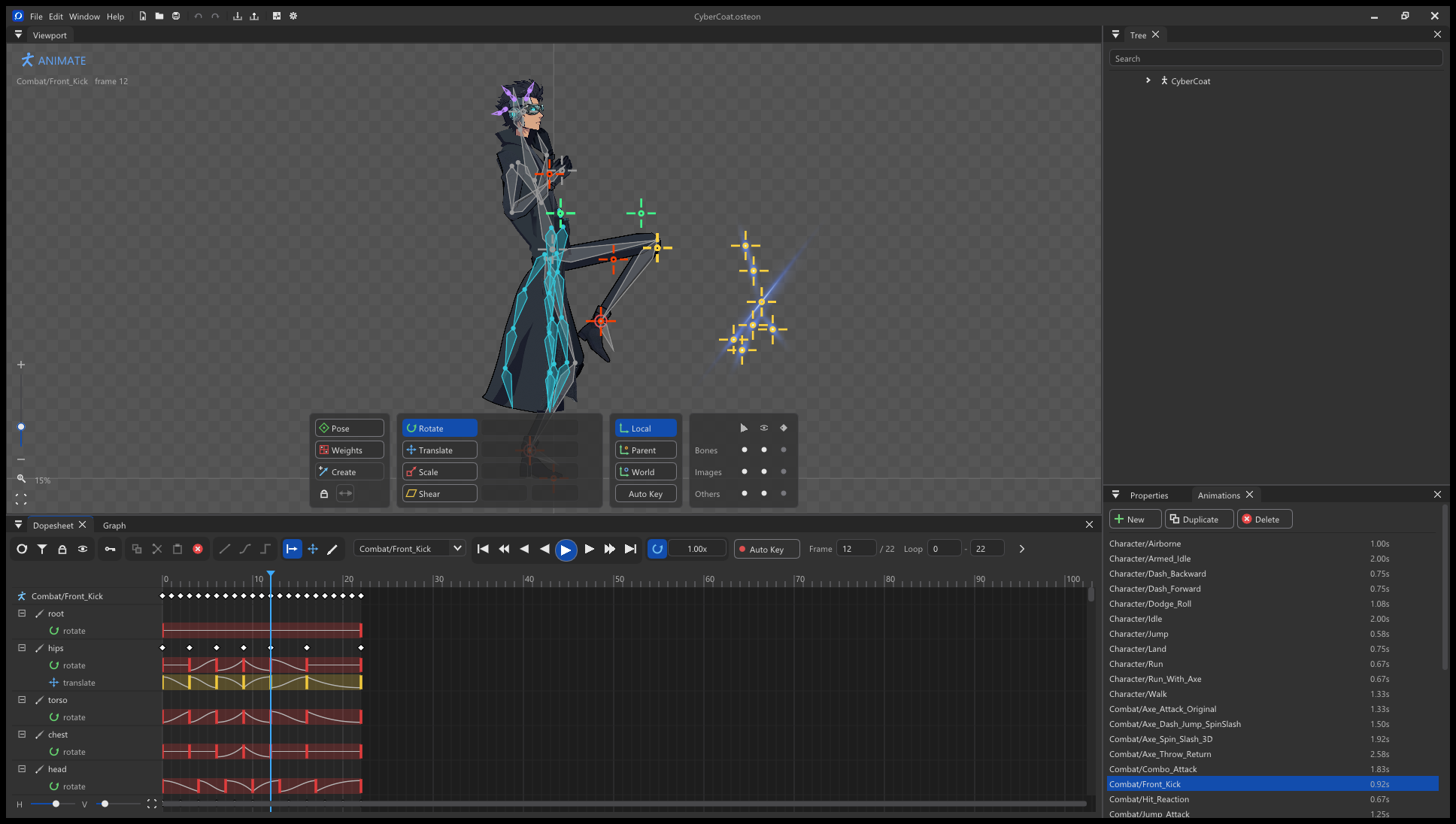
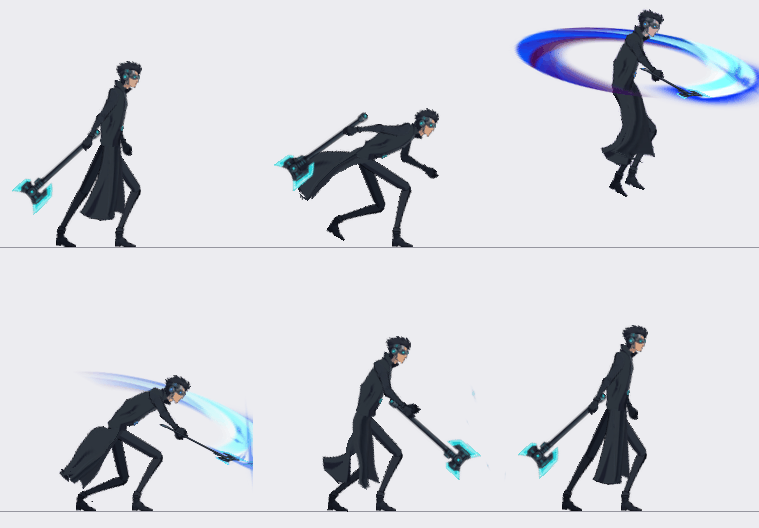
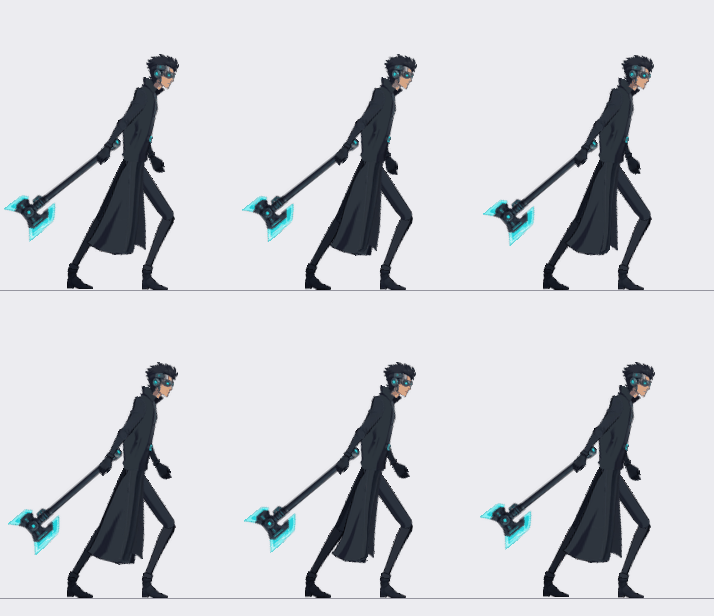
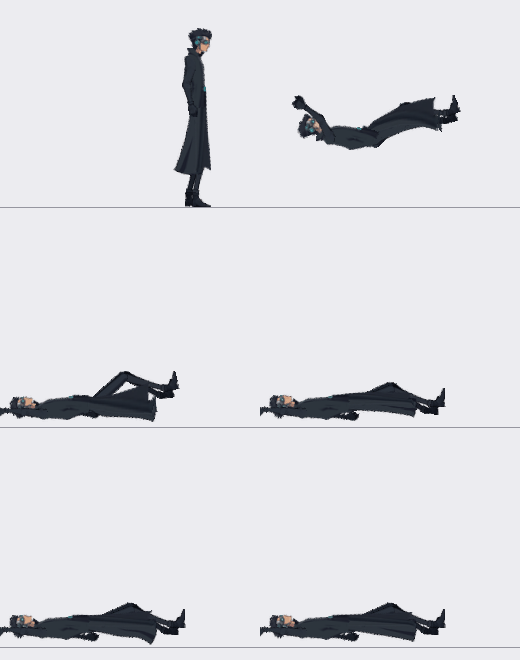
One character (CyberCoat: 66 bones, 42 slots, 37 animations), rigged and animated in Osteon2D.
What it does
Rigging
- Bones, five inherit modes, slots, skins, draw order
- Rotate, translate, scale, shear gizmos
- PSD, image and folder import
Art & weights
- Regions, meshes, linked meshes, clipping, paths, points
- Auto, smooth and brush weight painting
Constraints
- IK, transform, path and physics
- Keyable properties, simulate and reset
Animation
- Dopesheet, graph editor with Bezier handles
- Auto Key, ghosting, mixing preview
Output
- Spine JSON (4.2 / 4.3 layouts), experimental binary
.skel - PNG sequences, GIF, video, texture atlas packer
Safe & international
- Undo for every edit, auto-save, crash recovery
- UI in 8 languages
Runtimes included: Godot and Unity
Godot 4 GDScript
Core checked against the C++ engine in headless Godot; the Osteon2DSprite node renders in a real window.
Unity C#
Core checked against the C++ engine. The renderer, importers and shaders are written but not yet run in a real Unity editor.
Step-by-step runtime guide → · Feature support and verification
Independent by design
Osteon2D is inspired by Spine but is its own project with its own code. It reads and writes the publicly documented Spine JSON format so work can move between tools. It is early alpha software (0.1.0): see PROGRESS.md for what is done and what is missing.